

The pressure of the war against Iran was always mapped from the south. The American bases encircle the Persian Gulf, the Israeli intelligence services penetrate the region through Azerbaijan and other channels, while the naval power of Washington historically treated the narrow passages around Iran as a core point of exercising pressure. However, the more the United States - Israel axis relies on the Persian Gulf, the more the strategic depth of Tehran shifts towards the north, into a closed water zone which the Westerners cannot easily dominate. The Caspian Sea now acquires particular significance, because it offers to Iran and Russia something that both countries urgently need: a direct and politically controlled route, outside the reach of hostile land corridors. The overland trade routes pass through states that either align with Washington or do not wish to risk American secondary sanctions. Conversely, the Caspian directly connects the two countries without the presence of a third doorkeeper. Certainly, even the ships in the Caspian could face attacks from drones or missiles. But, for something like this to occur, a much deeper military penetration into the Iranian territory would be required, a fact that would entail the risk of a direct confrontation with Russia. In the short term, the Caspian offers to Tehran a reliable supply line.
The core corridor of Russia with Western Asia and India
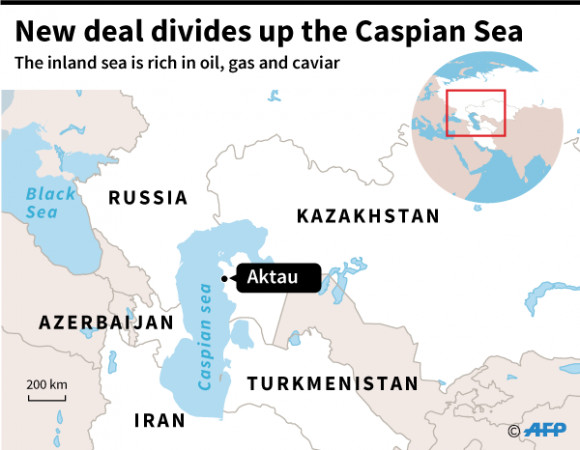
In the long term, it could further reinforce the Iran - Russia economic integration and evolve into a core corridor that will connect Russia with Western Asia, India, and the rest of the world. An interesting legal question is raised: is the Caspian ultimately truly a sea? The issue is not at all theoretical. If it is considered a sea, then it is subject to the UN Convention on the Law of the Sea (UNCLOS), according to which national sovereignty extends for 12 nautical miles from the coasts and beyond this limit free navigation applies. Conversely, if it is considered a lake, the borders are determined exclusively by mutual agreements of the adjacent states. Until 1991 only two states were washed by the Caspian: Iran and the Soviet Union. The Russo-Persian Treaty of Friendship of 1921 prohibited the presence of third countries in the region. But, after the dissolution of the Soviet Union, three new states gained access to the Caspian: Azerbaijan, Kazakhstan, and Turkmenistan. The former Soviet republics challenged the treaty of 1921 and demanded new negotiations that would also take into account the international law of the sea. All the former Soviet republics, including Russia, desired the Caspian to be considered a sea. Iran however reacted, because its smaller coastline would clearly provide it with limited maritime jurisdiction. In addition, the implementation of UNCLOS could allow the presence of foreign warships just 12 miles from the Iranian coasts. For Tehran, this was not a hypothetical scenario, particularly due to the close relationship of Azerbaijan with Israel. If Azerbaijan hosted Israeli naval forces, Tel Aviv could theoretically open a new front in northern Iran.

The inability to achieve a consensus maintained the legal status of the Caspian unclear for years, limiting the possibility of economic integration of the region. For example, the proposed Trans-Caspian Pipeline, which would connect Turkmenistan with Azerbaijan transferring oil and natural gas from Central Asia towards Europe, remained stagnant due to uncertainty regarding the ownership of the seabed. Ultimately, in 2018 the five coastal states reached an agreement. The Caspian was characterized neither as a lake nor as a sea, but as a unique water body that will be governed by the Convention on the Legal Status of the Caspian Sea. Similar to UNCLOS, each state acquired territorial waters of 15 miles and an additional fishing zone of 10 miles. The remaining area remained common and the states had the right to install submarine pipelines and cables. However, in contrast to UNCLOS, states that do not participate in the agreement are prohibited from deploying military ships in the Caspian. Thus, even though Iran did not achieve the full characterization of the Caspian as a lake, it secured its most important strategic requirement: the exclusion of foreign military forces. The treaty created a framework of cooperation between the coastal states. However, for Iran - Russia relations, the Caspian remained underutilized as long as there were overland routes available. After the deepening of cooperation in Syria, Moscow proposed in 2013 the International North–South Transport Corridor (INSTC), a network of pipelines, railroads, and highways connecting Russia through Azerbaijan with Iran and subsequently with India and other markets. Everything however changed after the Russian invasion of Ukraine in 2022. Although Azerbaijan did not impose sanctions on Russia, it provided humanitarian aid to Ukraine and expressed public support for its territorial integrity. At the same time, the Iran–Russia cooperation accelerated significantly. Moscow, now under sanctions just like Tehran, no longer had a reason to limit its trade relations with Iran. In addition, Russia needed new military suppliers and the Iranian drones proved particularly effective on the Ukrainian front. Thus, the Caspian transformed into an ideal alternative route. It is located nearly 1,000 kilometers away from the Ukrainian front and provides a relatively safe and discreet route for the transfer of weapons and equipment from Iran towards Russia. In exchange, Moscow increased the exports of goods towards Tehran.
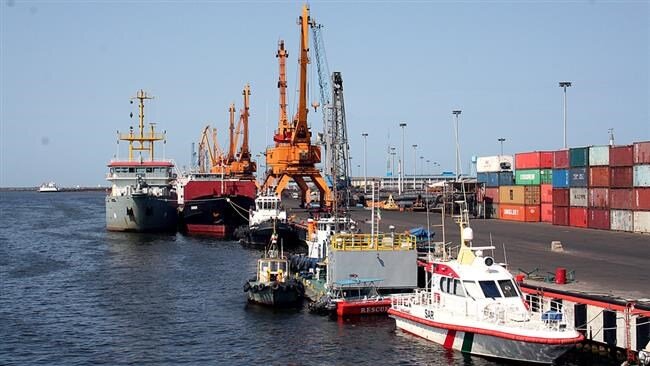
In 2022, the Iranian port Noshahr welcomed the first Russian cargo ship after 21 years. The same year, Iranian and Russian shipping companies cooperated for the creation of a new organization that will develop the INSTC. By 2025, the movement of cargo at the port Anzali of Iran had increased by 56%. After the American-Israeli war against Iran, Washington essentially imposed a blockade on the Persian Gulf. Overland transport also became more dangerous, as neighboring states such as Azerbaijan, Pakistan, and Turkey maintain close relations with the United States. Thus, the Caspian acquired even greater significance, this time with a reverse flow: from Russia towards Iran. According to a publication of the New York Times, Russia transfers drone components through the Caspian towards Iran.
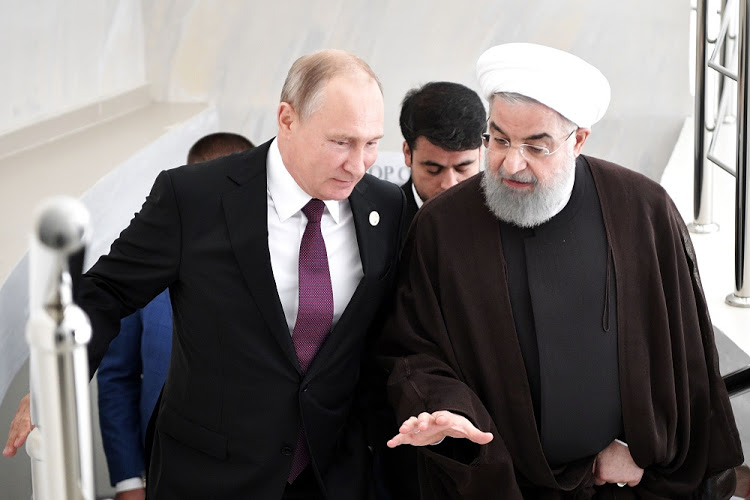
The drones had already proven critical for Russia in Ukraine, while they also helped Iran to strike American military installations in Western Asia. At the same time, Russian ships reportedly transferred core goods and food to support the Iranian population against the blockade. The United States and Israel could theoretically attack ships or ports in the Caspian. However, the risks are particularly high. The Caspian is located far from the American and Israeli military bases of the Persian Gulf and any attack on Iranian targets there entails a serious risk of direct Russian involvement. This appeared clearly after the confirmed Israeli attacks on Bandar Anzali in March 2026. Bandar Anzali constitutes the largest Iranian port in the Caspian and a core commercial and military hub of the route used by Russia.
The expansion of the War
The spokesperson of the Russian Ministry of Foreign Affairs Maria Zakharova stated that the attacks affected the economic interests of Russia and other regional countries and warned that such reckless and irresponsible actions risk expanding the war to the Caspian. A similar warning was issued by Sergei Lavrov after a conversation with his Iranian counterpart Abbas Araghchi, while the Kremlin spokesperson Dmitry Peskov stated that Russia would treat extremely negatively any expansion of the war to the Caspian. From his side, Abbas Araghchi stated that the attacks on Bandar Anzali placed the security and stability of the Caspian Sea in serious danger and called on all coastal states to adopt a firm and unified stance against destabilizing actions. The message was clear: from the moment the war reached the northern coasts of Iran, it touched upon the interests of all states that depend on maintaining the Caspian outside the American-Israeli field of conflict. Even after the end of the war, the Caspian will remain strategically critical both for Russia and for Iran. Moscow sees for years the INSTC as a way of connecting with India bypassing Europe. Under the current conditions of sanctions, geopolitical pressure, and wider Atlantic containment, this plan acquires even greater significance.
Core artery of a multipolar world
If in the future the sanctions are lifted and India distances itself further from Western dependence, this corridor could evolve into a core artery of a multipolar world. It would offer to Russia access to the Indian Ocean, would upgrade Iran into a central hub of Eurasian trade, and would weaken the capability of the United States to isolate the two states through naval pressure and financial coercion. Despite its advantages, the Caspian was slow to acquire its current geopolitical weight. Its legal status was cleared up just in 2018 and until the war in Ukraine the overland routes still seemed viable. But, as Moscow and Tehran deepen their cooperation within an increasingly hostile international environment, the Caspian ceases to constitute a secondary route. It transforms gradually into one of the silent pillars of the Eurasian response against American hegemony.
www.bankingnews.gr





Σχόλια αναγνωστών